
(English below)
피키에서는 작년 11월부터 서울에서 활동하는 스타트업 창업자들과 함께 교류하는 <Fireside Chat> 프로그램을 정기적으로 진행하고 있다. 지난주에는 우리 세대 여성 창업자들을 테마로 한 행사를 열었고, vegan beauty를 표방하고 글로벌 시장을 일찌감치 개척한 Melixir의 이하나 대표와 순환 경제 커뮤니티/플랫폼 MONA를 창업한 Quinn Phan 대표 두 분과 함께했다.
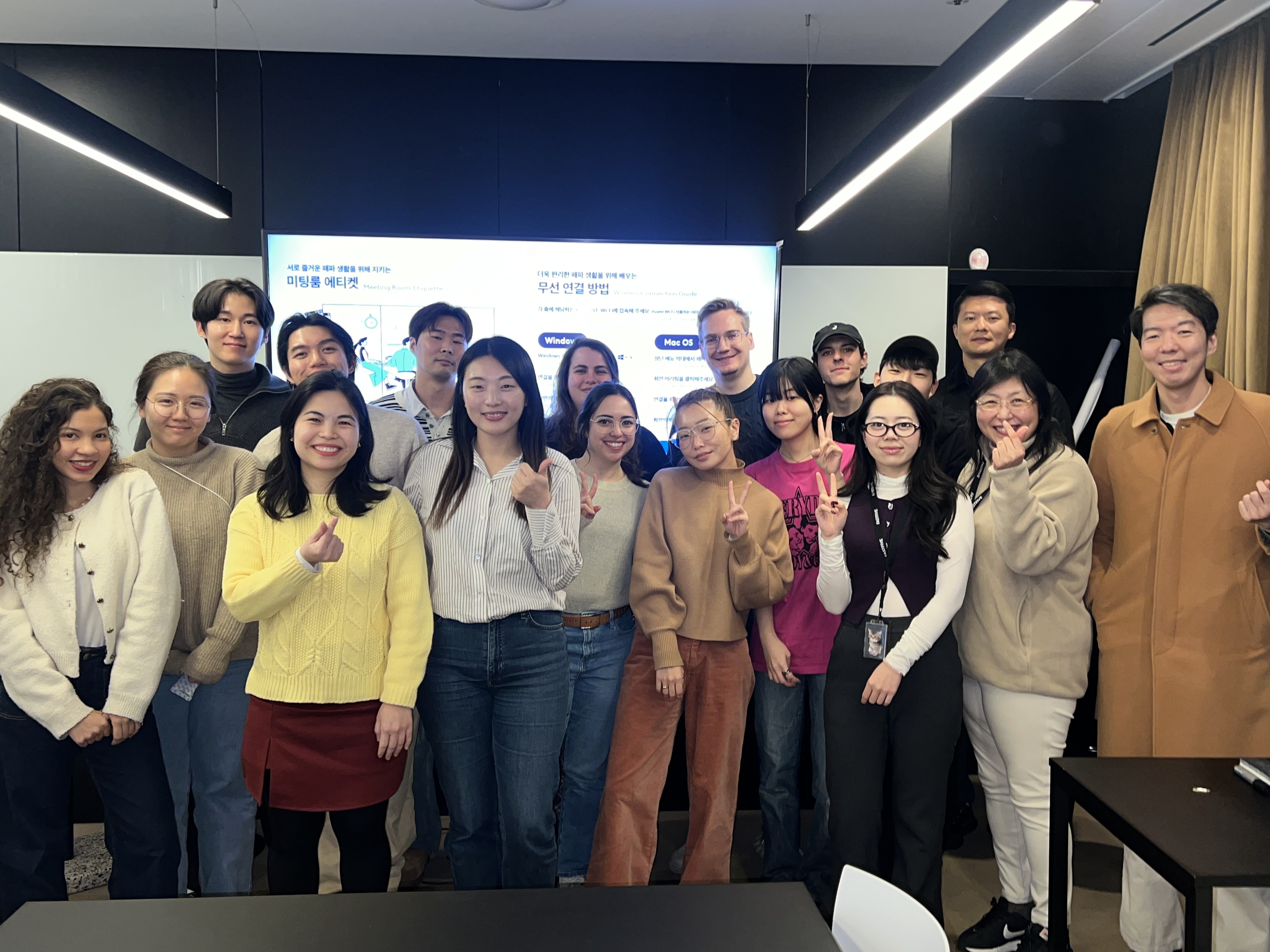
이 날 이어진 저녁 자리에서 우리 팀원 구성에 대한 다양한 질문과 코멘트들이 이어졌다. 서울에서 어떻게 이러한 다국적 팀을 구성할 생각을 했는지, 어떻게 가능한 것인지 등 인적 구성이 피키에서 가장 유니크한 부분이라는 피드백이 가장 도드라졌다.
Diversity in Korea is a MUST not a CHOICE
대부분의(90% 이상의) 한국 기업은 “한국인”이 창업을 한다. 초기 팀원들 5-10명이 모두 한국인인 팀에서는 “한국어”를 사용한다. “한국인”으로 구성된, “한국어”로 소통하는 팀에서 글로벌 사업을 시작하면, 영어 혹은 다른 언어를 유창하게 구성하는 “한국인”을 채용한다.
외국인을 채용하면 되지 않을까? 기존 팀원들이 이미 한국어를 팀의 “공용어”로 사용하는 상황에서 한국어가 100% 유창하지 않은 외국인 팀원은 언젠가는 한계를 느끼게 될 것이다. 실제로 많은 외국인들이 현업에서 근무하고 있지만, 이들이 경영진의 일부나 조직의 리더 역할을 하는 경우는 아주 드물 것이다. 왜냐? 한국인 경영진들이 한국어를 공용어로 사용하는 회사이기 때문이다. 태생적인 한계인 것이다.
Picky’s Lingua Franca = English
나는 개인적으로는 영어 공용어 도입에는 반대하는 입장이다. 한국인들이 영어를 절대 못하지 않는다고 생각한다. 현재 10대/20대는 영어에 이미 많이 노출되어 있고, 어학연수/교환학생을 다녀오는 비율을 생각하면 영어를 공용어화 하지 않고도 이미 영어를 잘하는 사람은 많다. 영어 능력이 쇠퇴하는 것은 오히려 사회생활 때문이다. 취업 이후에는 회사에서 업무를 한국어로 진행하기 때문에, 이메일 쓰기, 발표, 미팅 등에서 영어를 일상적으로 사용할 기회가 없다.
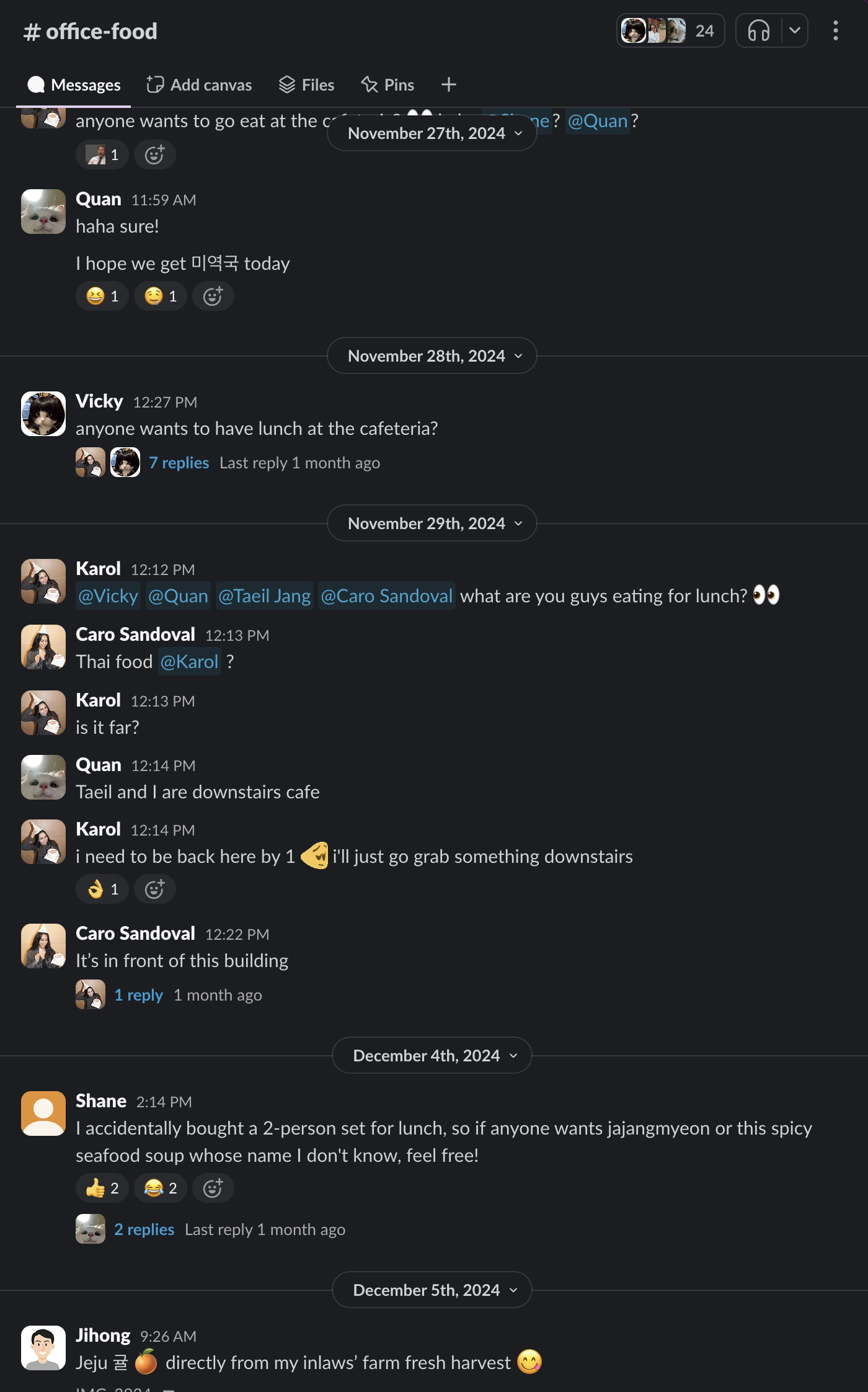
피키에서는 한국인 100%로 구성된 영업(Sales)팀을 제외하고는, 공식적인 업무 소통이 전부 영어로 이루어진다. 최근에 일본 관련 프로젝트를 진행했는데, 이 경우에도 일본어와 영어를 100% 구사하시는 서울에 거주하시는 일본 분을 채용하게 되었다. (한국어+일본어가 아닌…)
미국 실리콘밸리에서는 다양한 국적의 구성원들이 능력만 있다면, 평사원으로 시작해서 임원, 심지어 대표까지도 성장할 수 있는 환경이 마련되어 있다. 겉으로는 완벽해 보이지만 막상 여기에도 성별, 인종, 지연, 학연 등의 유리 천장이 존재한다는 비판이 존재한다. 그런데 여기에 언어의 한계까지 존재한다면?

70% of Helsinki-based team were foreigners https://www.hankyung.com/article/2017111550091
창업 직전 가장 오랜 기간 근무했던 슈퍼셀. 핀란드 헬싱키에 본사를 두고 있고, 핀란드 사람 6명이 공동 창업. 그 중에 3명은 창업 당시에 미국에 가본적도 없었는데, 3년만에 미국을 비롯한 전세계 1위 게임을 만들어 냈다. 실제로 근무한 사람만 알겠지만, 이 회사는 정말 “핀란드스러운” 회사의 면모도 많이 갖추고 있다. 하지만, 핀란드 사람들끼리 사적인 대화를 하는 경우를 제외하고는 업무는 100% 영어로 진행한다.
이 이야기가 그렇게 놀라운 것도 아니다 이제. BTS, 오징어게임을 비롯한 글로벌 1위 수많은 k-콘텐츠. 작년 프랑스를 제치고 미국 전체 수입 1위를 차지한 k-뷰티. 불닭볶음면을 비롯한 수많은 글로벌 히트 상품을 만들어내고 있는 k-푸드. 이제 시작일 뿐이지만, 여기서 다음 스테이지로 나아가기 위해서는 그 숫자가 매년 줄어들고 있는 “한국어를 사용하는 한국인”들만으로는 불가능하다고 생각한다. 그래서 우리는 “Seoul-based multicultural team”의 best practice를 피키에서 만들고 있다.
(English – with ChatGPT)
We are regularly hosting the <Fireside Chat> program at Picky representing like-minded founders based in Seoul. Last week, we held an event themed around women entrepreneurs of our generation, featuring two remarkable guests: Hana Lee, the CEO of Melixir, who champions vegan beauty and has pioneered the global market early on, and Quinn Phan, the founder of MONA, a circular economy community/platform.
During the dinner that followed the event, various questions and comments about the composition of our team arose. The most striking feedback revolved around how unique Picky’s team composition is—questions like how we managed to assemble such a multicultural team in Seoul and how it was even possible. Wanted to share my underlying thoughts that led to this.
Diversity in Korea is a MUST, not a CHOICE
The vast majority of Korean companies are founded by “Koreans.” In early-stage teams where the initial 5-10 members are all Korean, “Korean” is the working language. In such teams, when they begin global business operations, they often hire “Koreans” who are fluent in English or other languages.
But what about hiring foreigners? In a team where Korean is already the de facto “lingua franca”, foreign team members who are not 100% fluent in Korean will eventually hit a limit in the organization. Although many foreigners work in the field, it’s very rare for them to be part of the executive team or to play leadership roles. Why? Because these companies are led by Korean executives who use Korean as lingua franca —a built-in limitation.
Picky’s Lingua Franca = English
Personally, I am against the notion of mandating English as the common language in Korea which is a hot topic in every election. I don’t believe Koreans are incapable of learning English. Many teenagers and people in their 20s today are already exposed to English through various means, and many have studied abroad or participated in exchange programs. The reason their English skills often decline is because of the work environment. After starting a job, where most operations are conducted in Korean, there’s little opportunity to use English regularly in emails, presentations, or meetings.
At Picky, all official work communication is conducted in English, except for the Sales team, which is 100% Korean. Recently, we worked on a project related to Japan, and for that, we hired a Japanese professional living in Seoul who is fluent in both Japanese and English (not Korean + Japanese).
In Silicon Valley, team members of diverse nationalities can rise from entry-level positions to executive roles or even CEO, as long as they have the ability. Although it seems ideal on the surface, criticism persists about glass ceilings related to gender, race, and personal connections. Now, imagine adding a language barrier to that mix.
70% of the Helsinki-based team were foreigners
Before founding Picky, I worked at Supercell for a significant amount of time. Supercell, headquartered in Helsinki, Finland, was founded by six Finns, three of whom had never been to the U.S. at the time of founding. Yet, in just three years, they created globally successful games that topped the charts, including in the U.S. While it retains many “Finnish” culture within the company, all work is conducted 100% in English.
This story is no longer surprising. Consider BTS, Squid Game, and countless other global #1 K-content hits. Or K-beauty, which overtook France to claim the top spot in U.S. imports last year. Or K-food, with global sensations like spicy ramen noodles. This is just the beginning.
To move to the next stage, relying solely on a shrinking number of “Korean-speaking Koreans” will not be enough. That’s why we are building the best practice of a “Seoul-based multicultural team” at Picky.

 The New Korean
Leave a comment